Sunday, June 26, 2011

Denali National Park

My wife and I drove up to Denali NP on Wed. afternoon. We had dinner at 229 Parks Restaurant and Tavern which is named for the mile marker on the Denali Hwy. My sister had eaten there last fall and highly recommended it. We started with fresh local pacific oysters and a garden salad. The buckwheat flour braided bread served with lemon/dill butter was particularly good. Next up were some outstanding duck confit tacos. We followed them with a fine halibut bouillabaisse that included paper thin fresh pasta strips, manila clams and green lipped mussels. Dessert was a chocolate trio, and a custard tart smothered in fresh blueberries, raspberries and blackberries. We drank a bottle of Nautilus sauvignon blanc from New Zealand. It proved to be a great starter meal for our time in Denali. We were so hungry and attentive to the food that I spaced out taking pictures of the dishes.

After dinner we went into the reception area at the McKinley Chalet Resort where we were staying to use the wifi. As we were leaving we ran into our friend and neighbor Brian who works for Aramark which manages the resort. He had helped set up our reservation. It turned out that he was "in town" for a couple of days on business. We had a drink with him and his business colleagues before begging off to get to bed since we knew we had to be up at 5 AM to catch the shuttle bus into the park.


The alarm rang all to quickly, but we were excited about taking the shuttle bus into the park. Denali NP was created in 1917, and has been expanded over the years to include a total of 6 million acres with one road that crosses thru the center of the park. The road is 90 miles long ending at Kantishna where gold was found in the early 1900's. Only the first 14 miles are open to private vehicles unless you have a permit to travel into one of the campgrounds. The vast majority of the visitors ride the shuttle buses past the 14 mile point in order to see the park and the big animals--grizzily bears, moose, caribou, Dall's sheep and wolves--plus Mt. McKinley which is our highest mountain at over 20,000 feet. 1 in 4 tourists to Alaska visit the park each year.

The shuttles are school buses and do not travel very fast on the gravel road. Most people buy a ticket that takes you as far out as the Eielson visitor center at mile post 66. Whenever a big animal is seen the bus stops for everyone to get a good look, and take pictures if the animal is close enough. While not one of the big animals, the red fox just above was a nice sighting on our way out. This particular coloration is called a cross fox--click on any photo to enlarge.

Because Mt. McKinley is so huge in both heighth and width, it creates its own weather system. As a result, it is often surrounded by clouds. They say you can only see part of the mountain 1 out of 3 days, and the top is only visible about 1 in 10 days. As a result the question is often asked as to whether the mountain is "out today". The photo just below shows the double top of the mountain barely visible in the small blue horizontal opening.


It took us 4 hours to make the drive out to Eielson. We then walked another mile down the road in hopes of finding the gyrfalcons that are nesting near mile marker 67. They put up signs wherever key birds of prey, or animals may be trying to raise young. When we arrived at the signs we only found a golden eagle taking sticks to a large nest site. Soon after we were fortunate to see a pair of gyrfalcons circling nearby but very high overhead.

We walked a bit further down the road and found some more signs. As we walked up a male gyrfalcon flew down towards us, and then circled briefly before flying about 300 yards back up the mountain where it perched. We had lunch while we waited hoping it would fly down closer to another perch that was obvious because of the white bird poop splattered below it. Instead the bird just stayed where it had landed, preening and checking out the scene. Unfortunately it was too far away to get a good photo. So instead I have added the 2 pics just below of first a white-crowned sparrow and then a golden-crowned sparrow. I was particularly glad to see the golden-crowned because I had not seen one in breeding plumage.


After over an hour of waiting for the gyrfalcon to come closer, we gave up our vigil and walked back up to the visitor center to catch a bus back. While there I did the "tourist" thing by holding a pair of caribou antlers up so my wife could take a picture. On the way out we actually saw a caribou walking in the river bed (second photo just below). During our bus ride we also saw a couple of moose, a total of 6 grizzly bears, including 3 fairly close by, and lots of Dall's sheep on the mountain sides. The only big animal we missed was a wolf. When we finally returned to the Wilderness Access Center about 5:30 we were more than ready to be off the bus.


We had bought tickets to ride the bus again yesterday, but decided to go to plan B. We slept in, and then drove out to the Savage River parking area which is where private vehicles have to stop. As we were approaching the parking area we were very lucky to have a lynx walk across the road in front of us before disappearing into the brush.

We walked 2 miles further down the road to a point where a trail cut thru the dense low vegetation allowing us to climb up to Primrose ridge. I was hoping to find up on the ridge some of the alpine breeding birds such as rock and white-tailed ptarmigan, lapland longspurs and northern wheatears. After climbing about 1500 feet in elevation we reached a long plateau that we hiked across. No birds were to be found anywhere, but instead we had a lengthy observation of the Dall's sheep in the photo just below. On our way back down we did see a golden eagle and a male northern harrier.


Since we did not find any ptarmigans on the ridge we went down to the river where we saw this male willow ptarmigan in its summer attire. Nearby was the female who had 5 chicks that rushed to hide under their mother. After about 8 miles of hiking we were ready to call it a day once we saw the ptarmigans.

We ate a second meal at 229 Parks which proved to be less impressive than the first nite. The food was still quite good, particularly the halibut tacos, but overall we felt the dishes were less inspired than on the first nite. This morning (Saturday) we were on the road by 8:30 to make the 460 mile drive down to Homer which is on Cook inlet on the Kenai peninsula. Stay tuned!

Wednesday, June 22, 2011

Gray-headed Chickadee Raft Trip--Entry 3


On day 6 we woke up to little wind, strong sun and very mild temps. After breakfast we loaded up the rafts and went over to the other side of the river to look for the arctic warbler that we heard calling all morning. We quickly located it but the bird was not really close and tended to hide some in the leaves as it sang. Eventually everyone got to see a bird that is found only in the summer in Alaska where it has traveled to from its wintering grounds in Thailand.

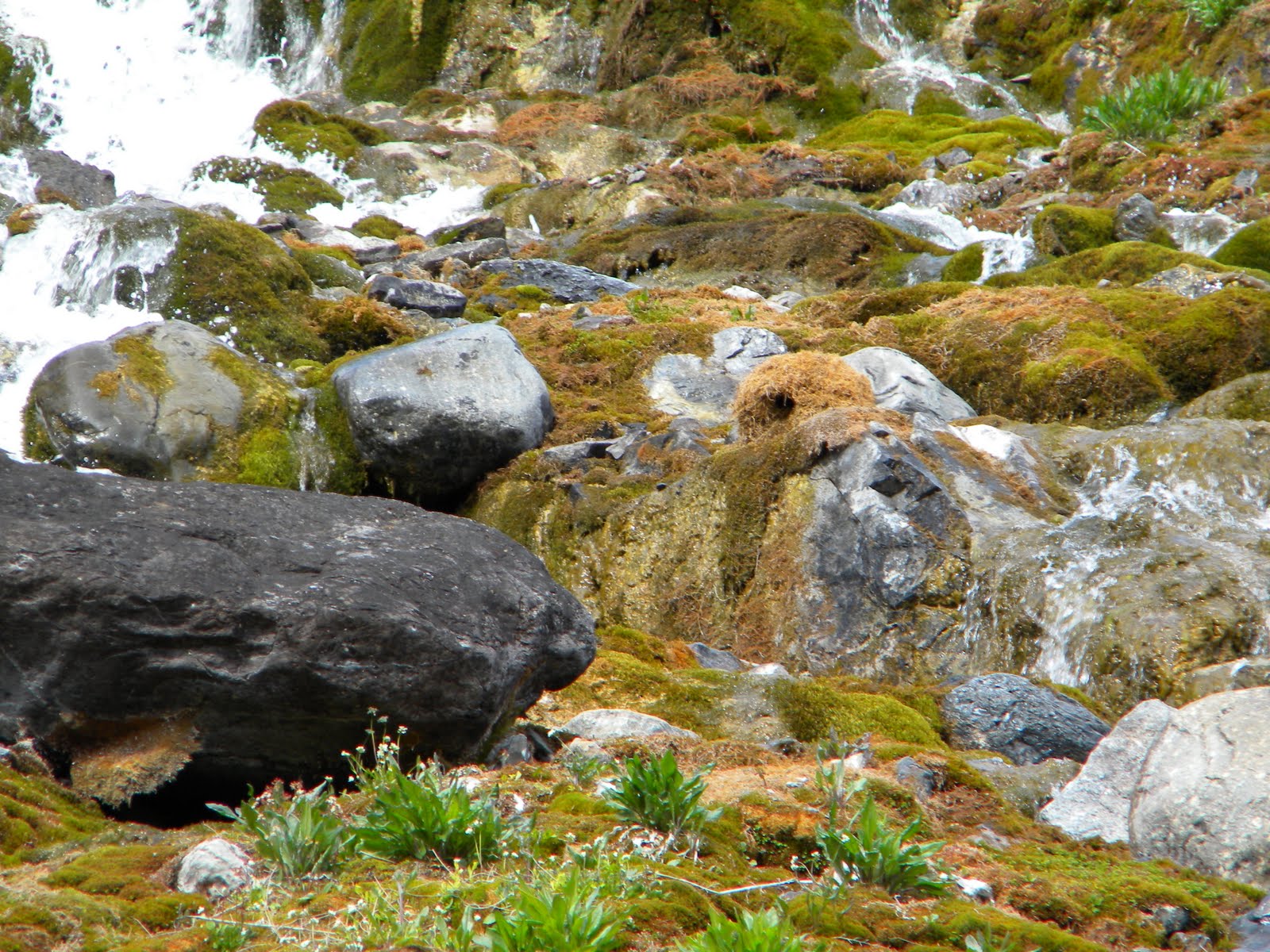
We started on down the river (photo above) again not knowing what kind of water conditions we might find. After some more mild rapids, it turned out to be much like day 4, mostly floating with some places where we had to pull the raft when it would bottom out. We stopped for lunch at a large spring that came right out of the side of the mountain. The photo just below shows some of the waterflow plus in the middle of the picture is a small round mound with a hole in it. It is the nest made from moss by a dipper which is one of north america's most interesting birds because it walks on the bottom of fast flowing creeks and rivers looking for food. The second photo below is of Richard, Marty, me and Craig standing in front of the spring flow.


After another roughly 10 mile float we arrived at our evening campsite which was at the base of mountain and just above the confluence of the Marsh fork and the main Canning river. By now we were feeling more competent as rafters, and confident that we would make our takeout point the next day. Dinner as always was prepared by Aaron and Bob. Many of the ingredients used for all our meals were air dried veggies and herbs that Bob and his partner Lisa had prepared the previous fall to use on the raft trips run during this summer by WBA.

We woke on Day 7 to another sunny, warm morning. By now everyone had adjusted to it never getting dark, waking at times to see either full light, or even the sun peaking over a low mountain. As we were packing up the boats the skies darkened with very ominous looking clouds. Soon after hitting the river it began to pour down rain--the heaviest of the trip. We quickly floated into the main fork of the Canning river which had much more water in it. While it was nice to have deeper water for floating, unlike the Marsh fork whose water was crystal clear and a most beautiful light hue of aquamarine, the Canning was milky. For 20-30 minutes it rained hard and then let up but stayed overcast. A second downpour came but stopped before long. During the rain a mother moose and 2 calves came walking across the river in front of us.

After the rain ceased we took a break to have a quick lunch, and then floated a short distance to our final campsite for the trip where the next day the bush plane would come pick us up. By the time we had camp set up the sun was out shining brightly. We had seen a red-throated loon while floating, and it plus the arctic warbler had raised the bird trip total to 45.


Since the afternoon had turned so pretty, Bill and I asked Aaron to hike up with us to the low plateau just above our campsite to see if some more new birds might be on the lakes we could not see. We spent the 2+ hours walking over the tundra and found 10 more new birds for the trip including a flock of hoary redpolls. The photo just above is of a pair of horned grebes in full breeding plumage--the male is on the right with bigger yellow "horns" and more black on the neck (click on it to enlarge). The photo just below is of Aaron, and the one below him is of a full breeding plumage american golden plover.


When we returned to camp we all had our last dinner of the trip. It began with margaritas using ice we had chipped off an ice mass along the river. It was Marty's birthday, so we also drank some 21 year old single malt scotch from the Isle of Jura. The dinner was capped off with a dark chocolate tort/cake that Bob had made at home and packed carefully to survive the weeklong trip.


Sunday dawned almost totally clear with light winds. We packed up in stages depending on who was flying out next. We said goodbye to Bob first who took almost all the gear and rafts on the first shuttle flight back to our put in point so that he would be there to meet his next rafting group. Among the new group would be two 80 year olds and two 70 year olds, and they would be taking a 17 day trip that floated all the way to the arctic ocean. The photo just above is of the bush plane landing on the gravel bar to pick us up.


Next out were Jim, John and Sue who made the 45 minute trip back to Arctic Village. After they were dropped off, the bush pilot delivered 3 of the group heading in to meet Bob. Next out for us was Bill, Richard and myself. The photo just above was taken flying back up the river valley which let us see from above where we had floated over the past 6 days. Finally Aaron, Craig and Marty made it back to Arctic Village where we all boarded the bigger plane to make the 90 minute flight back to Fairbanks.

We all said our goodbyes as the group split up to return to their lodging. Craig, Marty, Richard and I returned to our B&B, looking forward to having a shower. We were tired and a bit sore from all our efforts but very thankful to have been able to make a raft trip in such a wild beautiful part of the world. We walked into downtown Fairbanks for dinner, and strolled thru the summer solstice festival. Seeing the booths and people reinforced that Fairbanks is definitely a unique place. I am now in Anchorage where my wife flew into yesterday to meet me. We are about to begin our drive up to Denali NP. Stay tuned!

Gray-headed Chickadee Raft Trip--Entry 2


On our way back from seeing the chickadee on day 3, we walked thru an area looking for another arctic specialty bird, the smith's longspur. I have only seen this bird in its drab winter plumage in Oklahoma so I was excited about finding it in full breeding attire. The photo above is of our group after checking out a smith's--Bob is in the red shirt next to the scope and Aaron is the very tall guy with the dark cap. We were not able to get close enough to take photos but thru the scope we all had good looks at this very colorful bird which is the size of a large sparrow and tends to stay close to the ground.


On day 4 of our trip we loaded up the rafts again (photo above) not sure what the water depth would be. The weather was pretty good, not too hot or cold or windy. We ended up being able to float most of the time with occasional raft hauling. After a long day including some rapids/boulder dodging at the end of our float, we made our preferred campsite by about 7 PM knowing that we would have a 2 nite layover. The 2 niters are great because it takes at least a hour to set up camp in the evening, and at least 2 hours in the morning to break down and reload the rafts.

At this site we also hoped to see wolves at a den that WBA had discovered last year, but the wolves had not returned to it this year. Instead we saw 2 foxes in the same area. Sue also briefly saw a wolverine when she went down to the river to brush her teeth, but when the wolverine saw her it ran off before anyone else could see it.


On day 5 we had a chance to look at a second chickadee nesting site that was located in a narrow side canyon about a quarter mile off the river. The canyon has a pretty stream flowing out of it (photo just above). We headed up there after breakfast to see if the chickadees were back this year. Sure enough they were nesting very high up on the canyon wall in a cliff swallow "house" which you can see in the photo just below--the upper hole had a cliff swallow living in it, but the hole just below to the right was the home of a pair of chickadees (click on photo to enlarge). We watched them actively flying in and out of the "nest" feeding their young.


After watching them for a time we headed further upstream to go look at a cave. As we were crossing the stream we noticed a partially eaten caribou carcass and decided to turn around in case a grizzly bear was in the area. We returned to camp and spent the rest of the day enjoying the beauty and serenity of the Brooks range which reminds me of the highlands of Scotland. During dinner we saw a red fox stalking a rock ptarmigan who of course eluded it by flying away. It landed not far away back upstream, and sat there throughout our meal, giving us good looks at it thru our scope.


While in this area we continued to see new birds for the trip including several say's phoebes which I think of as a desert bird since I usually see them in the southwest, but the arctic is in fact a cold desert. We finished the day with 43 different bird species seen so far on our trip. I have added another photo taken on day 3 of the gray-headed chickadee since on day 5 the chickadees were far too high up to get a good photo. We had been hearing an arctic warbler calling on the other side of the river all day, and planned to look for it on day 6 before heading further down river. Stay tuned!

Tuesday, June 21, 2011

Gray-headed Chickadee Raft Trip--Entry 1


This is the first of my postings on the 8 day raft trip I completed last week with Wilderness Birding Adventures (WBA) in the Arctic NWR located in the northeast corner of Alaska. The trip is run each year between June 10th and 20th with the primary goal of seeing gray-headed chickadees--arguably the most difficult breeding bird to find in North America because of the challenge of locating it in the wilds of Alaska. Because of the vast area in which it lives, finding it while it is nesting makes it somewhat easier to see. However, since it begins nesting in late May, being able to float the rivers in the Arctic NWR in mid June can be problematic due to ice and snow. As the photo above shows, we woke up to snow on our first morning which was a harbinger of the quickly changing and erratic weather we experienced during the trip--but I am getting ahead of myself.

Eight "hearty adventurers" joined Bob Dittrick and Aaron Lang from WBA on Sat. evening June 11th in Fairbanks for a pre-trip briefing. The adventurers included 3 of my closest friends--Craig, Marty and Richard--plus 4 others--Bill, Jim, John and Sue--all birders that I had run into at least once during my big year in 2010. Info was shared, and gear was checked to be ready for our early Sunday departure.

We all arrived at the airport for the 1st of 2 plane flights to be told by Bob that floating the river might not be possible due to very low water levels. Having been on a wait list for 3 years already, and after some anxious discussion, all agreed to go ahead in hopes of being able to get down the river. We flew out to Arctic Village first, and then were shuttled on a smaller plane to a backcountry "landing strip" on the Marsh fork of the Canning river where we set up camp. Soon after arriving we found a mother grizzly with 2 cubs feeding at some distance on a mountainside on the other side of the river. We kept checking them out until we went to bed.

The next morning with snow still falling we hauled the 2 rafts, and all our equipment over a 1/4 mile of ice/snow to the main channel of the river. As we loaded up the rafts the snow finally stopped, but we still had a fairly strong wind blowing up river in our faces. We proceeded to float when possible, and walk/pull the rafts thru the shallows where necessary. While jumping in and out of the rafts, 3 of our group slipped and fell into the river, but no one was injured or exceedingly soaked. After 4 miles we reached our evening's campsite, putting up our tents in a light rain. Fortunately the rest of the evening was clear allowing us to eat comfortably, to sing happy birthday to Bob who turned 65, and then gladly to crawl into our sleeping bags.

The next morning dawned cool but mostly clear. After breakfast we began hiking up a side valley to check various trees in which WBA had found gray-headed chickadees nesting in prior years. The first 2 trees with nesting cavities proved to be empty this year, but the 3rd was the charmed as documented in the series of photos just below (click on any photo to enlarge).


When we first arrived at this tree Aaron heard a chickadee calling. It flew in near us, so we moved back and saw it disappear. When we walked around to the other side of the tree we found the nest hole about 4 feet off the ground, and then sat down in the soft moss about 30-40 feet away. Over the next hour we watched as the 2 parents came and went intermittently to feed the hatchlings, which we could only hear in the hole. In the photos above you will notice that the parent is flying out with a poop sac.

We also saw other birds including northern shrikes, gray jays, and 2 golden eagles high in the sky being harassed by 2 ravens. With the "target bird" well seen and thoroughly enjoyed, everyone was elated and felt hugely relieved because the pressure was now off to find the chickadee. Stay tuned!

Saturday, May 28, 2011

Fan-tailed Warbler Redux


The top photo above of the fan-tailed warbler was taken by Martin Meyers who I wrote about yesterday. The photo just above is of a sizeable group of birders scanning down to the creek area where the fan-tailed warbler would make brief appearances early on Friday morning. The guy in the blue shirt with the white hat on the right is Martin Meyers. Unlike yesterday, when I first arrived this morning the warbler was singing frequently which was critical to finding it foraging on the ground in the leaves and rocks across the creek. I was fortunate to see it up close one more time when it flew over to our side of the creek, and fed for about 5 minutes around 11:45 AM.

The photo just below is of one of 2 painted redstart parents who had a nest close to the fan-tailed viewing area. The parents would fly in regularly, sit in the tree in the photo, and then drop down to the slope where their nest was on the ground. Lots of photogs when not looking for the fan-tailed would set up their tripods to take pics of the redstarts. Click on any photo to enlarge it. We also had a male elegant trogon fly down close to where the fan-tailed was feeding.


The photo just above is one of the feeding stations at the Kubo B&B which is just across from where the fan-tailed warbler was most regularly seen. It was surprising to see a migrating swainson's thrush partaking of the cut oranges along side the black-headed grosbeak which are numerous in Madera Canyon.

After leaving Madera Canyon I headed down to the Patagonia roadside rest stop because another fan-tailed warbler was seen along the creek there early yesterday morning. It is probably the only time 2 fan-tailed warblers have been seen in AZ on the same day since there are only 8 records of the bird in AZ. Other birders were also down there looking for it, but no one else saw it after the first observer reported it.

Mid afternoon I headed over to the Paton's to check out the many feeders in the yard. The blue grosbeak shown below kept coming to that one feeder along with gila woodpeckers, brown-headed cowbirds, a single bronzed cowbird, and lesser goldfinches. Several birders were enjoying sitting in the shade of the canopy on a hundred degree day. We also saw violet crowned, black-chinned, broad-billed and broad-tailed hummers; yellow-breasted chat; inca, common ground, mourning and eurasian collared doves; curve-billed thrasher; lazuli bunting; gambel's quail; abert's towhee; song and white-crowned sparrows; bewick's wren; summer tanager; and heard a gray hawk.


I spent last nite with my long time friend who lives in Tucson. This morning I stopped in at Sweetwater Wetlands in Tucson to see a few last birds before heading to the airport. I saw a migrating olive-sided flycatcher, and studied cassin's, western and tropical kingbirds as they fed and chased each other around. After only 48 hours of birding my species count hit 91 capped off by the multiple sightings of the fan-tailed warbler. I am off to Alaska on the 10th of June. Stay tuned!

Thursday, May 26, 2011

Can You Say Fan-tailed Warbler?


Last Monday a fan-tailed warbler was found in Madera Canyon located 4o miles south of Tucson, AZ. Usually this very rare visitor from Mexico when seen in the US never hangs around. Someone will find one, and few lucky close by birders may also get to view it over the next few hours before the bird disappears. Most recently two fan-tailed warblers were sighted last year in SE AZ but neither lasted for more than 4 hours. Of the 56 new world warblers recorded in the ABA area, the fan-tailed is the only one that I had left to see.

When I read that it was seen again throughout the day on Tuesday I decided to put a ticket on hold to fly down here early this morning if it was also seen yesterday. When for the 3rd day in row it was in exactly the same place, I called Melody Kehl, who is a friend and professional bird guide down here, to see what she thought about this bird. She had seen it on Monday, and felt that it had good water and plenty of food to stay happy for a bit longer. That sealed the deal for me.

I was up at 4 AM to catch my 6:15 flight thru Dallas, arriving in Tucson at 10. I was in Madera Canyon checking on the situation by 11:15. The good news was that the warbler had been seen and heard frequently from 6:30 to 8:30. The not so good news was that it had not been seen or heard since. So the stakeout began. Lots of birds were around including sulphur-bellied and dusky-capped flycatchers, a pair of painted redstarts, several black-headed grosbeaks and hummers. Unfortunately there was also a sharp-shinned hawk coming and going along the creek. This bird of prey loves eating other birds.

About 1:45 while I was watching 2 dusky-capped flycatchers chase each other around I noticed a bird fly toward me from across the creek. I located it in a small tree, and saw that it was the much sought after fan-tailed warbler. I immediately called out that it was back, and within 2-3 minutes upwards of 15 birders were all oohing and aahing as the bird foraged on the ground not more than 20 feet in front of us. We were able to watch it for 10-15 minutes before it moved out of sight. Given the light conditions, the 3 not so great photos above are the best my camera could do to capture this beautiful bird--click on any photo to enlarge.

One of the birders who walked up after I alerted others about the warbler was Martin Meyers who I met a few times during my big year. He had driven 800 miles from Truckee, CA because like me it was also the last new world warbler for him to see. It was very nice to share the moment with him. There were also 3 birders in from Rhode Island that I had met last year on a few pelagic trips out of Hatteras, NC. Given that the fan-tailed warbler is a code 4 bird (there are only 10 records of the bird over the past 50 years in AZ), it is not surprising that so many birders from far away have made the effort to come look for it. I will be birding here again tomorrow and will try to see the warbler one more time. Stay tuned!

Friday, May 13, 2011

Days 7 and 8 at Magee Marsh

Wow!! The last 2 days have been intense birding. The local birders with the help of radar info had predicted that Thursday and Friday could be huge days for bird migration thru the Magee Marsh area, and they were dead on. Thursday we hit the boardwalk about 8 AM to find hordes of birders hoping for a fallout day, and they certainly were not disappointed. I soon saw one of the coveted warblers, a mourning, so very briefly up in a tree before it disappeared. Fortunately within an hour it was found very close by, and throughout the rest of the day it would show up off and on at the same spot allowing for good looks. I could not a get a photo of the mourning, but I did get one of the northern parula above (click on any photo to enlarge).


One of the birds that almost everyday is found on a roost at Magee is the gray phase screech owl in the photo above. Near this bird's roost is a owl nest box where at times a red phase screech will perch 1/2 way out. As you might imagine, both attract crowds. The green heron just below also was commonly seen over the past week.


After seeing the mourning well we proceeded to work the boardwalk, looking for as many other warbler species as we could find. One of my favorites is the bay breasted warbler shown just below. It is one of the later warblers to arrive at Magee. The migration here begins to pick up speed around the 1st of May, and generally by mid May it peaks in the variety of bird species, particularly warblers. By the end of the day I had seen 27 warbler species--my personal 1 day high at Magee--including the bay-breasted warbler in the photo just below.


Another indicator of the progress of the migration is the number of female warblers relative to males. The males of any warbler species usually arrive ahead of the females, so when you start seeing lots of females as well you know that the migration is reaching a peak. Yesterday I saw females from 15 warbler species whereas a week ago I saw maybe 5 or 6. 2 other peak migration arrivals were the yellow-bellied flycatcher and the gray-cheeked thrush.

As Magee's fame has grown over the past decade, more and more birders come from all over the US, and even from other countries like England and Scotland (the Brits love birding in the US). As a result it can get quite crowded at certain places along the boardwalk when a rare bird is found. This morning for example another coveted warbler, a Connecticut, appeared for the 1st time this year. This species usually does not arrive at Magee until after the 20th of May, and even then it is quite uncommon. With 2 mourning warblers also at the same location, the crush of birders at 9 AM trying to get a view of the CT and the mournings was the most intense I have ever encountered. Friday the 13th of May proved to be the opposite of what is feared on Friday the 13th's.

The only other warbler that would draw as big a crowd is the Kirtland's, which so far this year has not come to Magee, but one did spend 4 days last week singing away in Columbus, OH on its way up to its breeding grounds in MI. I am sure the birder from VA (vanity plate below) must have loved seeing the Connecticut--it was my first one at Magee, and I had as good looks at it as the ones I have seen in MN where it breeds.


Since I needed to depart for Brooklyn, NY this afternoon, I was feeling like my week's worth of birding was perfectly bookended with the garganey last Friday and then the CT warbler showing up today. I could not get a photo of it, so I have added the photo just above of a lovely chestnut-sided warbler. I ended my 9 days of birding in Ohio with an overall total of 158 species including a personal best over a week's time of 30 warbler species. While at Magee I saw at least 20 species of warblers every day as well. I also finally got to meet and chat with Matt Stenger from Harrison, OH who is doing a full ABA big year. He was awfully happy to get the mourning and Connecticut warblers. Matt--Good luck with the rest of your big year. My next major birding will be in Alaska in June. Stay tuned!